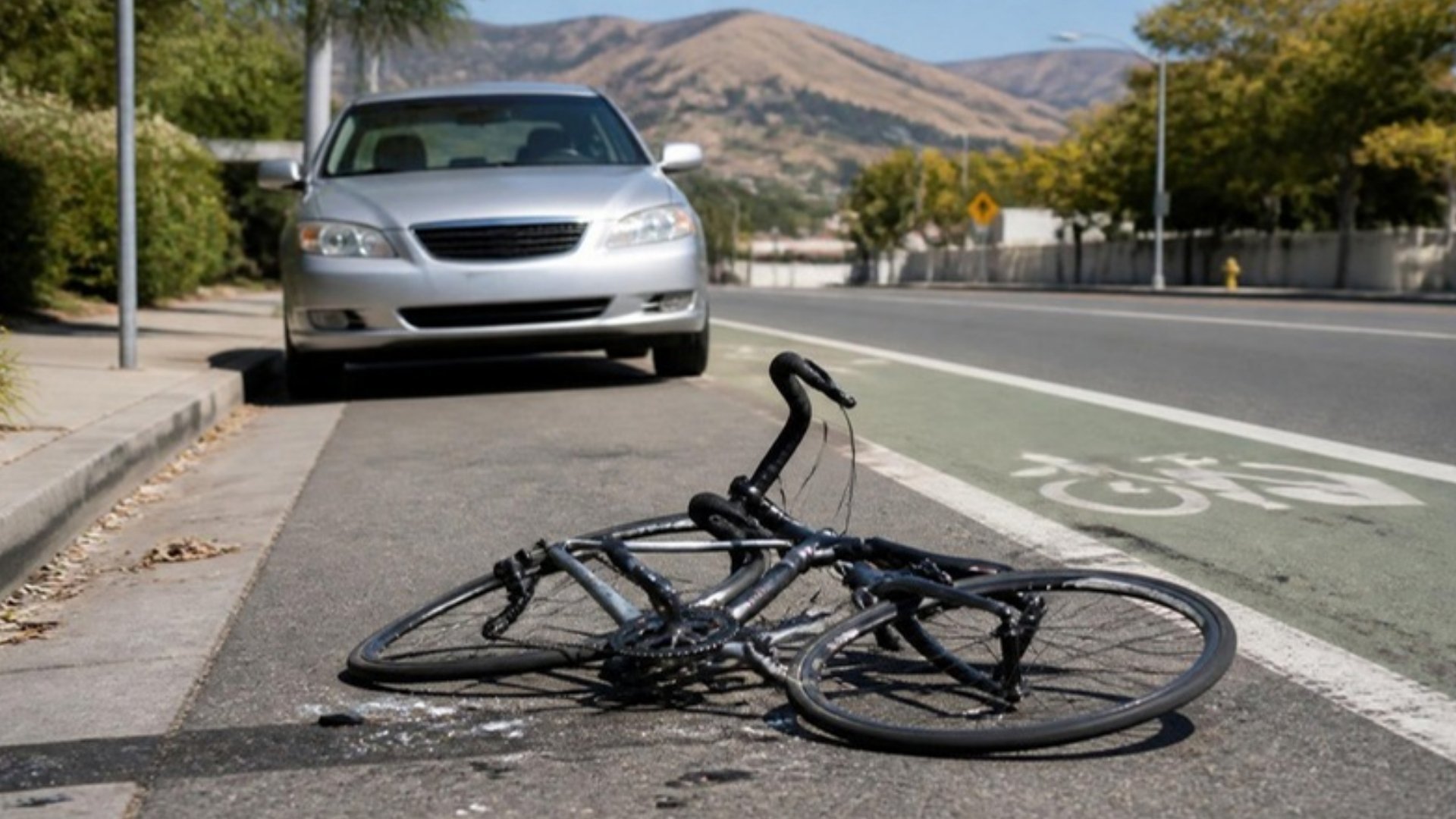
In Washington, the driver’s personal injury protection coverage usually pays a hurt cyclist’s medical bills first, no matter who caused the crash. Your own auto policy and health insurance come next. A Wenatchee bicycle accident lawyer then goes after the at-fault driver’s liability coverage and holds each insurer’s payback claim to its lawful share.
Ritchie-Reiersen Injury and Immigration Attorneys represents people hurt on bikes in Wenatchee and across Washington. The firm has recovered over $20 million for clients. Brandon Ritchie is a certified mediator, and Eric Reiersen is fluent in English and Spanish.
Were you hit by a car while riding in Wenatchee? Call Ritchie-Reiersen Injury and Immigration Attorneys at (206) 462-1883 for a free consultation about who should be paying your bills right now.
Why the Driver’s PIP Pays a Wenatchee Cyclist’s Bills First
Most people assume the at-fault driver’s insurer pays the hospital as the bills arrive. It usually does not. A liability carrier pays once, at settlement, and only after it accepts fault. The bicycle accident lawyers in Wenatchee at Ritchie-Reiersen Injury and Immigration Attorneys start with a faster source, which is personal injury protection, or PIP.
PIP is no-fault coverage. The Washington Insurance Commissioner’s PIP overview says it applies no matter who is at fault. Every auto insurer in the state must offer it. The real question after a bike crash is whose PIP pays, and in what order.
A Cyclist Counts as a Pedestrian Under RCW 48.22.005
The definitions section of Washington’s PIP law, RCW 48.22.005, answers that question. Subsection (11) defines a pedestrian as a natural person not occupying a motor vehicle. A person on a bicycle fits. Subsection (5) then makes a pedestrian “accidentally struck by the insured automobile” an insured under the driver’s policy. Say a car hits you on North Wenatchee Avenue. That car’s PIP can pay your medical bills, even though you never bought a policy from that company. Notice the word “struck.” A driver who forces you off the road without contact may fall outside this route.
Your Own Auto Policy Follows You Onto the Bike
Do you own a car? Your own PIP can cover you too. Under subsection (5)(a), the named insured and related household members are insureds, with no requirement that they be inside a car. If the driver carried no PIP, or the driver’s limit runs out, your household policy is the next place to look.
Before the first bill goes out, pull these records together.
- Get the driver’s insurer and policy number from the collision report.
- Find the declarations page for every auto policy in your household, since it shows whether PIP is listed.
- Ask for any signed PIP rejection form the insurer says it holds, because RCW 48.22.085 requires a rejection in writing.
- Keep every bill and explanation of benefits from the ambulance, the hospital and follow-up care.
Give each provider the PIP claim number at your first visit. The firm’s explainer on how PIP works covers opening a claim.
What Washington PIP Pays and How Fast It Runs Out
PIP limits are modest. RCW 48.22.095 sets the minimum package every insurer must offer. RCW 48.22.100 sets a larger package that a named insured can request. Here is how the two compare.
- Medical and hospital benefits are $10,000, or $35,000 under the larger package.
- Income continuation is $10,000 at up to $200 a week, or $35,000 at up to $700 a week.
- Loss of services benefits are $5,000, or $14,600 under the larger package.
- The funeral expense benefit is $2,000 under either package.
Those are per-person limits. When two policies could pay, their “other insurance” clauses decide the order and whether the limits combine. That is policy language a lawyer reads before anyone promises you a total.
Medical Benefits Cover Bills Incurred Within Three Years
RCW 48.22.005(7) covers reasonable and necessary expenses for care by providers licensed under Title 18. That includes ambulance and hospital charges, prescriptions, prosthetic devices and eyeglasses. The window is three years from the crash. A rider still in physical therapy in year four pays that bill some other way. The insurer can also refuse a bill it decides was not reasonable, necessary or related to the crash.
Confluence Health Carries a Level III Trauma Designation
The Department of Health’s trauma services list, publication 530-101 dated May 2026, shows Confluence Health in Wenatchee at Level III for adults. It also carries a Level III pediatric designation and a Level II rehabilitation designation. It is the only Wenatchee hospital on that list. Its emergency, imaging and surgical charges all draw on the same $10,000 medical limit.
A Transfer to Harborview Adds a Second Hospital’s Bills
Harborview Medical Center in Seattle is the only adult Level I trauma center on that state list. A rider with a serious head or spine injury may be moved there. That move adds a transport charge and a second hospital’s bills. Your records then live in two counties, which matters again when liens come due.
Wage and Household Benefits Start Late and Stop Early
Income continuation has two built-in limits. Under RCW 48.22.005(3), the benefit period begins 14 days after the crash. It ends when you can do your usual job, or at 54 weeks, whichever comes first. The combined weekly payment from PIP, workers’ compensation and disability coverage cannot exceed 85% of your weekly income from work. Loss of services pays people outside your household for chores you would have done, such as child care or yard work. It runs for up to 52 weeks.
Who Covers a Cyclist’s Bills After PIP Is Used Up
A broken wrist or a concussion can outlast a $10,000 medical limit. Once PIP stops, the bills go to your health insurance, or they wait on a lien against your injury claim. Neither one is free money. Both expect repayment from the settlement, and the rules on how much differ sharply.
How much each one takes back turns on the plan documents and the final settlement amount. No one can quote your net recovery before a lawyer reviews both. What the law does fix is the ceiling on provider liens.
Health Insurance Picks Up With Deductibles and Copays
Your health plan pays the next round of bills under its normal rules, including your deductible and copays. Some plans refuse crash-related bills until they see proof that PIP is exhausted or unavailable. A letter from the PIP carrier confirming the limit is spent answers that request. Keep every explanation of benefits, since those statements prove what the plan actually paid.
Provider Liens Under RCW 60.44 Have a 25% Ceiling
Washington lets ambulance services, hospitals, physicians and nurses claim a lien on your injury claim for treating a traumatic injury. RCW 60.44.010 creates that right. It also caps every such lien for one person and one crash at 25% of the settlement or verdict, combined. That ceiling protects the rest of your recovery. The statute does not reach a workers’ compensation claim.
The Notice Has to Be Recorded With a County Auditor
A provider only gets the lien if it follows RCW 60.44.020. The provider must file a verified notice with the auditor of the county where it gave the care. The filing must come within 20 days of the injury or care, or at any time before settlement and payment. The provider must also disclose that it uses liens in its billing practices.
Care in Two Counties Means Two Records to Check
Care at Confluence Health puts any lien notice with the Chelan County Auditor. A transfer to Harborview puts that hospital’s notice in King County. Before a settlement is paid out, both records get checked. Whether a late or defective notice binds your recovery depends on the filing dates, and a lawyer reviews those before anyone pays the lien.
How the At-Fault Driver’s Insurer Repays Your Medical Bills
PIP and health insurance keep bills paid in the short run. The at-fault driver’s liability coverage pays for the whole loss, including medical bills, lost income, and pain and suffering, which PIP never covers. It pays through a settlement or a verdict, not as bills arrive. Under RCW 4.22.005, your share of fault reduces that payment but never bars it, while PIP pays with no fault reduction at all.
RCW 46.29.090 sets Washington’s minimum liability limits at $25,000 for one person’s injuries, $50,000 for all injuries in one crash, and $10,000 for property damage. When the losses exceed the driver’s limit, your own underinsured motorist coverage under RCW 48.22.030 can make up the difference. The firm’s guide to uninsured and underinsured drivers in Washington covers that claim. What a liability claim is worth turns on the injuries, the proof of fault and the policies in play. A lawyer reviews all three before naming a number.
What Happens to PIP and Health Plan Money When the Case Settles
Now for the part that shows up when the settlement check arrives. PIP insurers and health plans usually want their money back. Washington courts limit how much a PIP insurer can take, and the timing of that repayment matters as much as the amount.
Every reimbursement figure depends on the policy wording, the plan type and the size of the recovery. A lawyer works those numbers from the actual policy and plan documents before you sign a release. Two Washington Supreme Court decisions set the ground rules for PIP carriers seeking repayment.
The Made-Whole Rule From Thiringer v. American Motors
In Thiringer v. American Motors Insurance Co., a 1978 decision, the Washington Supreme Court held that an insurer recovers only the excess left after its insured is fully compensated. The Court quoted that rule again in Mahler v. Szucs in 1998. A settlement limited by a small liability policy may leave the PIP carrier little or nothing to take. The insurer’s right exists, but it waits behind your own loss.
Mahler v. Szucs Makes the PIP Insurer Share the Legal Fees
Mahler also answered a second question. Who pays for the lawyer whose work produced the money the insurer wants back? The Court held that State Farm had to pay a proportionate share of the legal expenses its insureds spent to recover those PIP payments. In practice, the insurer’s share of fees and costs comes off its repayment. Ask to see that math in writing before the settlement is paid out.
How the June 2026 E-Bike Law Changes Who Pays
Were you on an e-bike? Then the machine’s legal label can decide which insurance pays. Engrossed Substitute Senate Bill 6110, Chapter 159 of the Laws of 2026, took effect June 11, 2026. It redrew the line between an e-bike and an electric motorcycle.
The legislature wrote a telling sentence into the bill. It said the current motorcycle and moped definitions already apply to many of the machines it removed from the e-bike category. Whether an insurer treats your ride as a bicycle turns on the machine’s specifications and the policy language. A lawyer checks both before the claim goes in.
What Still Counts as an E-Bike Under RCW 46.04.169
The amended statute keeps three classes of electric-assisted bicycle. Class 1 and Class 2 stop assisting at 20 mph, and Class 3 stops at 28 mph with a speedometer. The new subsection (2) removes two kinds of machines from the definition. Check these details on your own bike.
- Read the class label on the frame.
- Note the top speed the motor reaches without pedaling, since a machine that exceeds 20 mph on the motor alone is excluded.
- Confirm the motor’s rated power, which cannot exceed 750 watts.
- Find out whether a switch or an app can unlock a higher speed, since a machine built for easy reconfiguration is excluded too.
Photograph the label and keep the manual. Those records answer the classification question before an adjuster raises it.
Why the Label Decides Which Policies Pay
Two separate coverages hinge on Washington’s vehicle definitions. The first is the driver’s PIP, which reaches you only as a pedestrian. The second is your own underinsured motorist coverage, which the statute does not require for motorcycle riders. A rider on a lawful e-bike can usually keep both. A rider on an electric motorcycle can lose both on identical facts.
The Driver’s PIP Turns on the Pedestrian Definition
RCW 48.22.005(11) defines a pedestrian as a person not occupying a motor vehicle as defined in RCW 46.04.320. That cross-reference is where an e-bike claim gets decided. The driver’s PIP covers you as a pedestrian only if you were not occupying a motor vehicle when the car struck you.
A Class 1, 2 or 3 E-Bike Stays a Bicycle
RCW 46.04.071 defines a bicycle to include an electric-assisted bicycle. The motorcycle definition in RCW 46.04.330 expressly excludes an electric-assisted bicycle. That keeps a lawful e-bike rider on the bicycle side of the line. An insurer can still argue its own policy wording, so read the adjuster’s first letter carefully.
An Electric Motorcycle Rider Is Occupying a Motor Vehicle
RCW 46.04.330 defines a motorcycle as a motor vehicle on no more than three wheels, ridden on a seat or saddle and steered with handlebars. A throttle machine that tops 20 mph on its motor is no longer an e-bike after June 11, 2026. If it meets the motorcycle definition, its rider was occupying a motor vehicle. The Insurance Commissioner also notes that PIP does not cover injuries from using motorcycles or mopeds.
Underinsured Motorist Coverage Has a Motorcycle Exception
RCW 48.22.030(2) requires underinsured motorist coverage on Washington auto policies unless the named insured rejects it in writing. It makes an exception while the insured is operating or occupying a motorcycle or motor-driven cycle. A regular bike rider keeps that coverage. The statute does not require it for an electric motorcycle rider on the same facts. The machine’s specifications can decide whether two coverages exist at all.
Where a Wenatchee Bicycle Accident Lawyer Finds the Report and Files the Case
The Columbia River splits the Wenatchee Valley between two counties. Wenatchee sits in Chelan County. East Wenatchee sits across the river in Douglas County. The side of the river where you went down shapes which police agency writes the report and where the case gets filed.
RiverCom 911 answers 911 calls and dispatches for agencies in both counties, but it does not write the crash report. Its public records page sends requesters to the agency that responded.
- The Wenatchee Police Department handles crashes on city streets in Wenatchee.
- The East Wenatchee Police Department handles crashes on city streets across the river.
- The Chelan County Sheriff’s Office and the Douglas County Sheriff’s Office cover crashes outside city limits.
- RiverCom 911 answers requests for its own dispatch records, which are separate from the crash report.
PIP adjusters check that report for proof that a car struck you, so request it early.
The Loop Trail Detour Puts Riders on the Sellar Bridge
The Apple Capital Recreation Loop Trail runs about 10 miles along both banks of the Columbia. Since June 2025, its south crossing at the W.T. Clark Pipeline Bridge has been closed for the South End Bike and Pedestrian Access Bridges project. The city set November 2026 as the reopening target. Until then, the posted detour routes cyclists over the Senator George Sellar Bridge, which carries SR 285 between the two cities. A crash on that detour can land on either side of the county line.
Chelan and Douglas County Superior Courts and the Three-Year Deadline
RCW 4.12.020(3) lets you sue for an injury in the county where the crash happened or where a defendant lives. For a Wenatchee crash, that usually means Chelan County Superior Court, on the fifth floor at 401 Washington Street. A crash on the East Wenatchee side points to Douglas County Superior Court at 203 South Rainier in Waterville. RCW 4.16.080(2) gives you three years to file. That deadline runs separately from PIP’s three-year window for medical expenses.
Common Questions About Bike Crash Medical Bills in Wenatchee
These payment questions come up again and again in the weeks after a crash. Each answer assumes a Washington crash with a private driver and a standard auto policy.
A crash involving a city or county vehicle adds a government claim step under RCW 4.96.020 before any lawsuit. A work-related ride brings in workers’ compensation, which changes the lien rules. Treat these answers as a starting point for a conversation with a lawyer.
Does the Driver’s PIP Pay if I Caused the Crash?
Usually, yes. The Insurance Commissioner states that PIP applies no matter who is at fault, and the exclusions in RCW 48.22.090 do not include rider fault. Your share of fault matters later, in the liability claim.
What if a Driver Ran Me Off the Road Without Touching Me?
The driver’s PIP reaches a pedestrian “struck by” the insured car, so a no-contact crash makes that route harder. Your own underinsured motorist coverage can still apply to a phantom vehicle under RCW 48.22.030(8). The facts need corroboration from someone other than you, and the crash must be reported to police within 72 hours.
Can a Hospital Lien Take My Whole Settlement?
No. RCW 60.44.010 caps all provider liens for one person and one crash at 25% of the recovery, combined. A health plan’s repayment claim falls under different rules.
Does PIP Pay to Replace My Damaged Bike?
No. PIP benefits cover medical bills, wages, household services and funeral costs. The bike goes on the property damage part of the at-fault driver’s liability claim, where Washington’s minimum limit is $10,000.
Talk to a Wenatchee Bicycle Accident Lawyer About Your Medical Bills
Medical bills do not wait for a settlement. The driver’s PIP, your own policy, your health plan and the at-fault driver’s insurer each pay at a different time. Each one also wants something back at the end.
Ritchie-Reiersen Injury and Immigration Attorneys sorts that order out for injured cyclists in Wenatchee and across Washington. The firm has recovered over $20 million for clients, and Brandon Ritchie is a certified mediator. Its bicycle accident practice handles claims against drivers and insurers.
Call a Wenatchee bicycle accident lawyer at Ritchie-Reiersen Injury and Immigration Attorneys at (206) 462-1883 for a free consultation. Bring your claim numbers, the declarations page from any household auto policy, and the bills you have received so far. No lawyer can promise a result, but the first call can tell you which insurer should be paying today.
You can also reach the firm through its contact page. The firm’s Wenatchee personal injury team handles other crash types too.