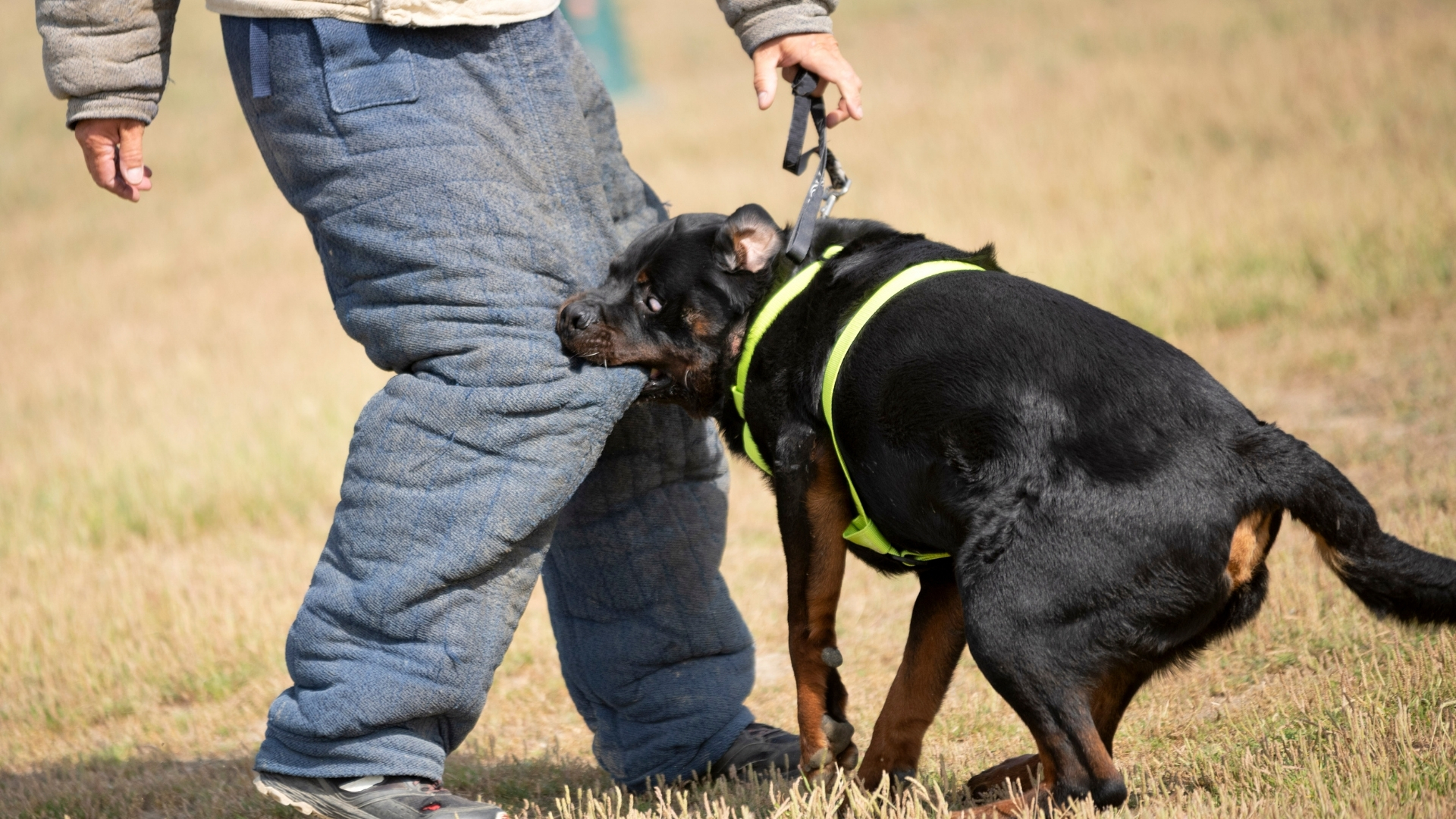
Washington makes dog owners strictly liable for bites. The statute says an owner is liable regardless of the former viciousness of the dog or the owner’s knowledge of it, which means there is no free first bite in this state. You have to have been in a public place or lawfully on private property when it happened. Two defenses can still defeat the claim, and provocation is a complete bar rather than a reduction.
Most states make a bite victim prove the owner knew the dog was dangerous. Washington threw that requirement out in 1941 and has kept it out ever since. That single choice makes a Washington bite claim structurally simpler than the same claim in most of the country.
Simpler is not the same as automatic. If a dog bit you in Spokane or anywhere in eastern Washington, call Ritchie-Reiersen Injury and Immigration Attorneys at (253) 766-5783 before you give a recorded statement.
Washington Makes Dog Owners Strictly Liable for Bites
Read that last clause again, because it is the whole point. Ritchie-Reiersen Injury and Immigration Attorneys does not have to prove the dog had bitten anyone before, that the owner had been warned, or that the owner was careless. The bite and your lawful presence carry the liability case.
What Strict Liability Removes From Your Case
In a negligence case you must prove the owner failed to act reasonably. Under RCW 16.08.040 that question disappears. A perfectly careful owner whose gentle family dog bites someone for the first time is liable the same as a careless one.
What remains contested is damages, and often the location question. Insurers rarely fight the bite itself. They fight where you were standing and what you were doing.
Where You Have to Have Been Standing
Implied consent covers a lot of people. Mail carriers, delivery drivers, meter readers, and invited guests are all normally lawfully present. The fenced or posted proviso is where the defense lives, and it is why a bite inside a closed gate is a harder case than a bite on a front walkway.
The Two Defenses That Can Still Beat a Washington Dog Bite Claim
Strict liability is not absolute liability. The statute leaves two doors open, and one of them closes a case entirely.
Provocation Is a Complete Bar
Complete means complete. It does not reduce your recovery by a percentage the way ordinary fault would. It ends the claim. That is why insurers investigating a Washington bite ask so many questions about what the victim was doing in the seconds before it happened, and why answering those questions casually is a mistake.
Trespassing and the Fenced or Posted Rule
A person who was not lawfully present falls outside the statute altogether. The strict liability provision only reaches bites in a public place or where the victim was lawfully on private property.
Falling outside the statute does not always end everything. A trespasser may still have a common law negligence claim in narrow circumstances, but the easy path is gone and the case becomes much harder.
What Happens if the Dog Did Not Bite You
The statute reaches a dog that bites. It does not reach a dog that knocks you down, jumps on you, chases you into traffic, or causes a bicycle crash. Those injuries are real and they are common, and they run on a completely different legal theory.
Washington courts apply the common law rule for domestic animals. If the dog had known dangerous propensities abnormal to its class, the owner is strictly liable. If there were no such known propensities, the owner is liable only for negligence in failing to prevent the harm. In practice a non-bite dog case usually turns on a leash law violation plus ordinary negligence, which means the local ordinance matters far more than it does in a bite case.
How Spokane Handles Dangerous and Potentially Dangerous Dogs
State law sets the liability rule. Local law decides what happens to the dog and creates the paper trail your claim will use.
Spokane Municipal Code 10.74.010 adopts the Spokane County Code chapter on dogs and cats as the animal control regulations for the City of Spokane. Enforcement runs through the Spokane County Regional Animal Protection Service, which covers unincorporated Spokane County plus Spokane, Spokane Valley, Cheney, Airway Heights, Deer Park, Liberty Lake, Medical Lake, Millwood, and Rockford.
The Declaration and the $250,000 Requirement
Appeals go to the city hearing examiner, and an owner who fails to register within fifteen days faces euthanasia of the dog absent a court order. For a bite victim, that $250,000 requirement is worth knowing about, because it identifies a potential source of recovery that a homeowner policy might not cover.
The Ten Day Observation Period After a Bite
Rabies control drives a separate process. Washington regulation WAC 246-100-197 allows the local health officer to order a healthy dog confined and observed daily for at least ten days after a bite, with any illness reported.
The Spokane Regional Health District investigates animal bites to prevent rabies transmission and directs bites within city limits to be reported to the regional animal protection service. Reporting creates the record. A bite that never gets reported leaves you proving it happened.
What Partial Fault Does to a Washington Dog Bite Claim
Washington uses pure comparative fault, and it is genuinely pure. RCW 4.22.005 provides that contributory fault chargeable to the claimant diminishes the damages award proportionately but does not bar recovery.
There is no 50% cutoff. A person found 80% at fault still recovers 20% of their damages. That makes Washington considerably friendlier than most states, and it is why the provocation defense matters so much. Provocation is the one thing that turns a reduction into a total loss.
The Three Year Deadline and Why Waiting Hurts
RCW 4.16.080 sets a three year limit for an injury to the person or rights of another, which is a year longer than most states allow.
The extra year is not a reason to wait. Scars settle and change appearance over the first year, which affects valuation. Witnesses at a place like High Bridge Dog Park on South A Street or the Centennial Trail move away. Animal control records get purged on their own schedules. A serious bite treated at Providence Sacred Heart Medical Center, the region’s Level II trauma center, generates records that are easy to collect now and harder later.
Common Questions About Washington Dog Bite Claims
These come up in nearly every dog bite call the firm takes. The answers describe Washington law generally, and your own facts can change how they apply.
Does the dog’s breed matter in Washington?
Not for liability. Washington bars cities and counties from prohibiting a dog based on breed unless they provide an exemption process based on a behavioral assessment, and the legislature found that breed is not inherently indicative of whether a dog is dangerous. Breed may be recorded for identification when a dog is declared dangerous.
Who actually pays a dog bite claim?
Usually the owner’s homeowner or renter insurance. Some policies exclude certain dogs or cap animal liability, which is why the declared dangerous dog bond or policy can matter. The owner remains personally liable when insurance does not reach.
What if a dog bit my child?
Provocation arguments come up constantly in child cases, and children are held to a different standard of care than adults. Do not accept an adjuster’s characterization of what a child did. Separately, deadlines can work differently for a minor, so confirm the timeline rather than assuming three years.
Do I have to report the bite to animal control?
Reporting is how the observation period and any dangerous dog process start, and it creates the official record your claim will rely on. In Spokane, bites are directed to the regional animal protection service, and the health district tracks them for rabies control.
What if I was bitten at a dog park?
Owners remain liable. The City of Spokane’s own dog park rules state that owners are legally responsible for the behavior of their dogs at all times and are liable for damage or injury inflicted by them. Being in a place where dogs run off leash does not transfer the risk to you.
Talk With Ritchie-Reiersen About Your Washington Dog Bite Claim
The liability rule in Washington favors bite victims more than almost any other state’s. What decides these cases is the record. Whether the bite was reported, whether the location was documented, whether the medical treatment was consistent, and whether anyone gave the insurer a provocation story before understanding what that word means legally.
Ritchie-Reiersen Injury and Immigration Attorneys has recovered over $20 million for clients across Washington, handling injury claims alongside a full immigration practice. Brandon Ritchie is a certified mediator, and Eric Reiersen is fluent in English and Spanish.
Call (253) 766-5783 and bring what you have. Photographs of the wound and the location, the animal control incident number, the owner’s name and address, and the name of anyone who saw it are the most useful items.
You can also reach the firm through the contact page. Washington gives you three years, and the case gets weaker every month you spend using them.