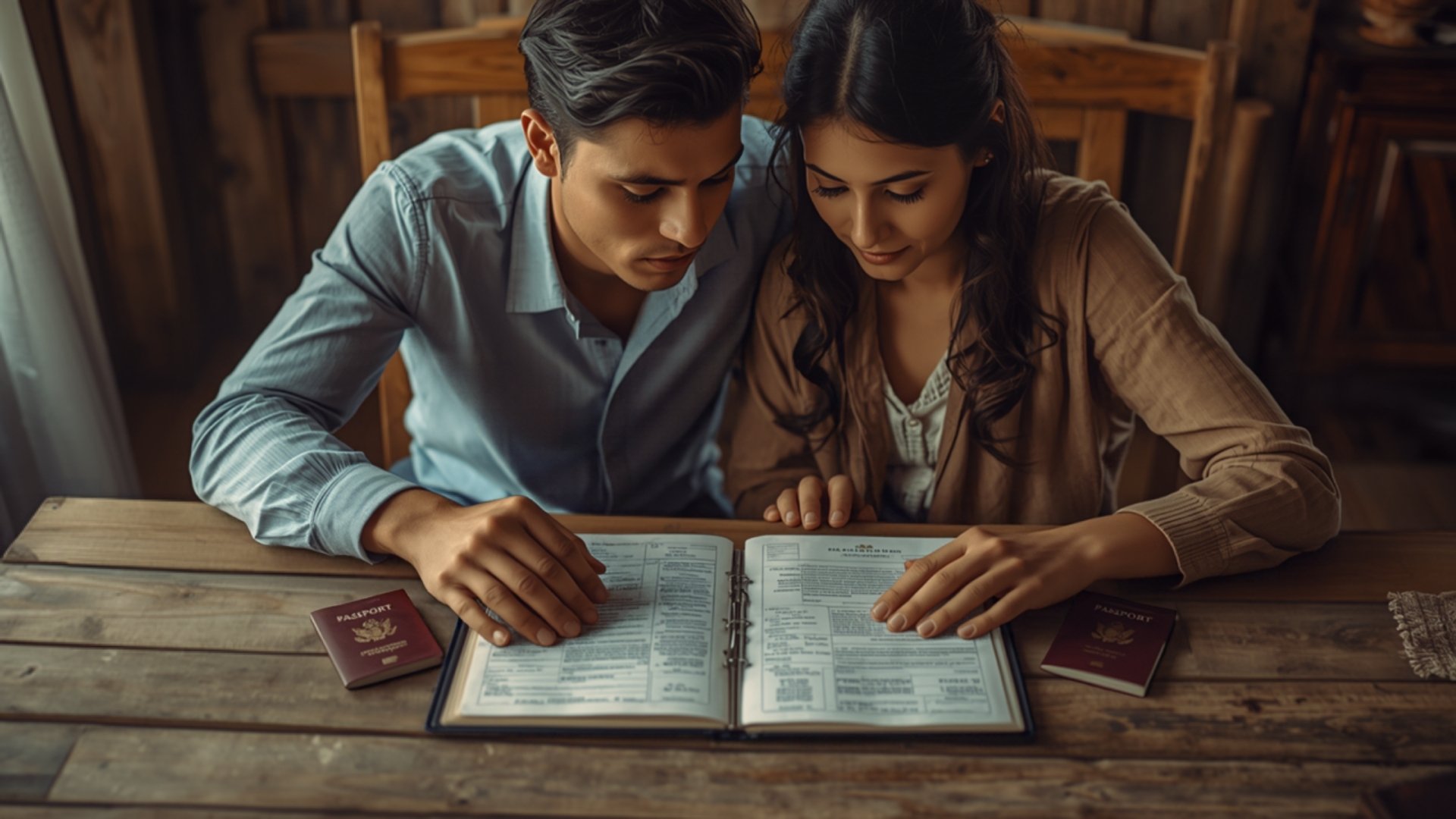
A Kennewick green card lawyer prepares you for an interview at the USCIS Yakima Field Office, the office that covers Benton and Franklin counties. An officer places you under oath, checks your identity, and walks through your Form I-485 line by line. Preparation decides whether that hour ends in an approval.
Ritchie-Reiersen Injury and Immigration Attorneys represents immigrants and their families across Washington, including the Tri-Cities. The firm handles green cards, naturalization, and deportation defense. Eric Reiersen is fluent in English and Spanish, which matters in a city where 16.5% of residents were born outside the United States. That figure comes from the Census Bureau’s 2024 American Community Survey.
If your interview notice just arrived, call Ritchie-Reiersen Injury and Immigration Attorneys at (206) 462-1883 for a consultation. Preparation works best when it starts weeks before the date printed on that notice.
Where Does a Kennewick Green Card Interview Actually Happen?
Here is the first thing that surprises people. Your green card interview does not happen in Kennewick. It does not happen in Pasco or Richland either. The immigration team at Ritchie-Reiersen Injury and Immigration Attorneys answers that question first in every adjustment case. Where the appointment sits changes how the entire day gets planned.
The Tri-Cities has no USCIS field office. Benton County and Franklin County fall under the USCIS Yakima Field Office at 415 North Third Street in Yakima. That is where an officer will call your name. Your Form I-797C interview notice prints the address, and the notice controls. Read it the day it arrives, because a wrong assumption about the location costs people their appointment.
The USCIS Yakima Field Office Covers Benton and Franklin Counties
Eight Washington counties report to the Yakima office, and Benton and Franklin are two of them. Chelan, Douglas, Grant, Kittitas, Klickitat, and Yakima counties round out the list. A family in Kennewick, a farm supervisor in Prosser, and an applicant in Pasco all draw the same building. That concentration matters, because one office handles interviews for a large share of central and eastern Washington. Plan around it rather than around a Seattle schedule you read about online.
The Drive From Kennewick Up Interstate 82
The route runs roughly 84 miles northwest on Interstate 82, past Prosser, Grandview, and Sunnyside. Allow an hour and a half in clear weather, and build in extra time for winter road conditions. Most clients leave Kennewick before dawn for a morning appointment. Arriving late can mean a new date months out.
Biometrics Come First at an Application Support Center
Before the interview, USCIS collects your fingerprints and photograph at an Application Support Center. That is a separate appointment with its own notice and its own address. USCIS runs Application Support Centers in Yakima and Spokane, and your notice says which one to use. Missing that appointment stalls a case long before anyone schedules an interview.
Your Interview Notice Controls the Date, the Address, and the List
Form I-797C is the notice of action that schedules you. It names the date, the time, the office, and the documents to bring. Officers work from that list, and showing up without an item on it invites a Request for Evidence. Treat the notice as the agenda for the appointment rather than as a formality.
Read it with a pen the day it lands in the mailbox. Five things on that page decide how the next few weeks go.
- The date and reporting time tell you when to leave Kennewick for the drive to Yakima.
- The office address confirms which building you report to and where you park.
- The document list names every original the officer expects to see.
- The notice states whether your petitioner or sponsor has to attend with you.
- The receipt number identifies your file, so carry the notice itself and not a photo of it.
Anything on that list you cannot find becomes the first job. Certified copies take time, and several of them come from offices open only on weekdays.
Who Can Adjust Status Inside Washington, and Who Cannot?
Not every Kennewick resident with an approved petition gets an interview in Yakima. Some never qualify to file Form I-485 at all. The rule that decides it sits in Section 245(a) of the Immigration and Nationality Act, codified at 8 U.S.C. 1255. It is short, and it is unforgiving.
Adjustment of status is the path that keeps you in the United States while USCIS decides. The alternative is consular processing, which means leaving and interviewing at a U.S. consulate abroad. Which path applies is not a preference. The firm’s Washington green card attorneys start by working out which one federal law assigns, based on how you entered and what happened after.
Section 245(a) Starts With Inspected and Admitted
To adjust status, you must have been inspected and admitted, or inspected and paroled, into the United States. Inspection is the formal check at a port of entry. Someone who crossed without presenting at a port was never inspected. USCIS Policy Manual Volume 7 tells officers to deny an adjustment application from an applicant who was never inspected and admitted or paroled. Narrow exceptions exist under Section 245(i), for VAWA self-petitioners, and for special immigrant juveniles.
The Section 245(c) Bars and the Immediate Relative Exemption
Even after a lawful inspection, Section 245(c) blocks several groups. The bars reach crewmen, transit passengers, people who fell out of lawful status, and people who worked without authorization. Immediate relatives of U.S. citizens escape some of them, which is why marriage to a citizen changes so many cases. The exemption is partial, never total.
Those exemptions matter most to spouses, parents, and unmarried children under 21 of U.S. citizens. Four of the eight bars fall away for that group.
- The unlawful status bar under Section 245(c)(2) does not apply to immediate relatives.
- The Visa Waiver Program bar under Section 245(c)(4) does not apply to them either.
- The employment-based bar under Section 245(c)(7) drops away for immediate relatives.
- The visa violation and unauthorized work bar under Section 245(c)(8) drops away as well.
None of that erases the inspection requirement. An immediate relative who entered without inspection still cannot file Form I-485 from a home in Kennewick.
What a Kennewick Green Card Lawyer Does When You Entered Without Inspection
This is the hardest conversation in Tri-Cities immigration practice. A client is married to a U.S. citizen, holds an approved Form I-130, and has lived in Benton County for 15 years. The petition is approved, and the interview still cannot happen in Yakima. The entry was never inspected.
That is not the end of the case. It moves abroad, through a U.S. consulate, under the process called consular processing. That route works, and it carries one specific risk that has to be handled before anyone books a flight. Sequence is everything here, so the plan gets built before a single form goes out the door.
Consular Processing Means Leaving, and Leaving Triggers a Bar
Section 212(a)(9)(B) of the Immigration and Nationality Act creates the trap. Unlawful presence of more than 180 days triggers a three-year bar on returning. Unlawful presence of a year or more triggers a ten-year bar. The bar attaches when the person departs, so the flight itself starts the clock. Nobody should leave for a consular interview without a plan for that bar.
The Provisional Waiver Under 8 CFR 212.7(e)
Congress and the Department of Homeland Security built a fix. Form I-601A lets certain applicants ask for a waiver of the unlawful presence ground while they are still inside the United States. The rule lives at 8 C.F.R. 212.7(e). An approved provisional waiver takes effect only after the applicant departs, attends the consular interview, and the State Department finds the applicant eligible. The point is to shorten the separation, not to erase it.
File the Waiver Before the Consular Interview
Timing is the part people get wrong. The regulation requires the provisional waiver application to be filed before the immigrant visa interview abroad. File it late and the whole strategy collapses. USCIS decides the request by a preponderance of the evidence, and the applicant still has to merit a favorable exercise of discretion.
Who the Rule Locks Out
Not everyone qualifies. The regulation excludes applicants under 17 years old, applicants in active removal proceedings, and applicants under a final order of removal. A pending case before an immigration judge changes the analysis completely. If a family member is already in proceedings, the firm’s deportation defense attorneys look at that first, because the order of operations decides everything else.
What Actually Happens Inside the Interview Room
So the notice is in hand, the drive is planned, and you are eligible to adjust. What does the hour itself look like? Shorter than most people expect, and far more procedural. An officer is confirming that the sworn record on paper matches the person in the chair.
Federal regulation requires the interview in the first place. 8 C.F.R. 245.6 says each applicant for adjustment of status shall be interviewed by an immigration officer, subject to limited waivers. The USCIS Policy Manual sets out when an interview may be waived, including for parents of U.S. citizens and for certain young children. Assume yours will happen, because the waiver is the exception.
The Oath, the Identity Check, and the Line-by-Line Review
The officer brings you into a small room and places you under oath. Everything said after that is sworn testimony. Identification comes next, usually a passport, a state ID, and the interview notice. Then the officer opens your Form I-485 and reads through it with you, confirming addresses, employment, entries, and every yes or no answer. Corrections happen right there, and the officer initials them.
Bring the file with you rather than trusting that USCIS has every page. One well-built folder solves most interview-day problems.
- Carry original passports, birth certificates, and any prior immigration documents.
- Carry your interview notice along with a copy of everything already filed.
- Carry certified English translations for every document written in another language.
- Carry updated tax returns and pay records if a sponsor signed a Form I-864.
- Carry certified court dispositions for every arrest, including cases that were dismissed.
- Carry government-issued photo identification for yourself and for your interpreter.
That last item catches families off guard. An interpreter without identification is an interpreter who waits in the lobby.
Bringing Someone Who Speaks for You
Kennewick is a city where plenty of households speak Spanish at home, and a USCIS interview runs in English unless something changes that. You may bring an interpreter. Those rules are stricter than most people expect, and a poor choice can end the appointment early. The Kennewick immigration lawyers at the firm sort out the interpreter question early, never in the parking lot.
Interpreters at the Yakima Field Office
The USCIS Policy Manual tells officers to prefer a disinterested party as the interpreter. An officer who speaks your language fluently may skip the interpreter and question you directly. Whoever interprets has to present valid government-issued identification. That person also signs an interpreter’s oath and a privacy release before the questions start.
Who May Serve as Your Interpreter
A neutral adult who speaks both languages fluently is the safe choice. The officer has discretion to allow a friend or a relative, and discretion is not the same as a right. A petitioning spouse who will also be questioned makes a poor interpreter. Hire a professional when the case history is complicated.
When an Officer Disqualifies an Interpreter
USCIS reserves the right to disqualify an interpreter on the spot. Two grounds appear in the Policy Manual. An officer may find the interpreter is not competent to translate, or may find that the interpreter’s participation compromises the integrity of the examination. Either finding can send you back to Kennewick with no decision.
Your Lawyer’s Role in the Room
An attorney attends the interview with you and can object, clarify, and protect the record. The lawyer does not answer for you, and officers stop that quickly. What the lawyer really does is prepare you beforehand, so your sworn answers line up with the file. A good lawyer also sees a Request for Evidence coming and starts drafting the response that same day.
How Marriage Cases Get Tested in Yakima
Marriage-based cases draw the sharpest attention at the interview, and for a reason. The officer is deciding whether the marriage is real or was entered to obtain a green card. Questions get specific fast. Who pays the power bill, and which side of the bed does each person sleep on?
None of that is a trick. It is the only practical way an officer can test a relationship in under an hour. Couples who live an ordinary shared life leave an ordinary shared paper trail. Building that record is most of the work, which is why the firm’s immigration team starts it the month the petition goes in.
Evidence That a Marriage Is Real
Documents beat testimony every time. A joint lease on a Kennewick apartment, a shared bank account, and a car title with both names answer the question before it is asked. Photographs spread across several years help, and so do affidavits from people who know the couple. Under RCW 26.04.140, a Washington marriage license comes from a county auditor, so a couple married in Kennewick traces the certified record back to the Benton County Auditor.
Start gathering these the month the petition is filed, never the week before the interview.
- A joint lease, mortgage, or utility bill showing both names at the same Tri-Cities address.
- Joint bank statements covering several months rather than a single snapshot.
- Insurance policies and employer benefit enrollments that name the spouse.
- Tax returns filed jointly for every year the marriage has existed.
- Dated photographs with family from more than one occasion and more than one year.
Range persuades more than volume. Five categories spread over three years beat 200 photographs from a single wedding day.
When USCIS Separates a Couple
Most couples interview together at the same table. If the officer doubts the marriage, the two can be separated and questioned apart, with both sets of answers compared afterward. Inconsistencies surface there. Spouses who actually live together handle that comparison fine. A rehearsed script usually fails, because a script only covers the questions somebody predicted. Honest answers about an ordinary life hold up better than any amount of coaching.
The Documents Benton County Applicants Chase Hardest
Every adjustment case stalls on the same few documents. Knowing where they live in Benton County saves weeks of waiting. Most of them sit inside one complex on West Okanogan Place in Kennewick, which is convenient once somebody tells you.
USCIS Policy Manual Volume 7 lists the initial evidence for a Form I-485 filing. Photographs, the foreign birth certificate with a certified translation, proof of inspection and admission, Form I-864 where it applies, the Form I-693 medical exam, and court-certified arrest records all appear on that list. Officers issue a Request for Evidence when something is missing. Gathering early is cheaper than answering an RFE later.
Certified Dispositions From the Benton County Justice Center
Here is a local detail that saves a wasted trip. Kennewick has no municipal court of its own. The Washington Courts directory routes Kennewick, Richland, West Richland, and Prosser municipal cases to Benton County District Court at 7122 West Okanogan Place, Suite A110, in Kennewick. Felony records come from the Benton County Clerk in Suite A210 of the same complex, which also houses Benton County Superior Court. One address covers both sides of a criminal history.
Sponsors, Translations, and the Medical Exam
Form I-864 is the affidavit of support, and it is a binding contract. Under 8 U.S.C. 1183a, the sponsor must show the means to maintain an annual income equal to at least 125% of the federal poverty line. That affidavit is legally enforceable against the sponsor by the sponsored immigrant, by the federal government, and by any agency paying a means-tested benefit. Every foreign document needs a certified English translation, and the Form I-693 medical exam has to come from a USCIS-designated civil surgeon.
Kennewick Green Card Interview Questions
Families across the Tri-Cities ask the same handful of questions before the drive to Yakima. Short answers follow. Each one turns on the facts of your case, so treat them as a starting point and not as a promise about any outcome. Your lawyer can apply them to your actual file.
How Long Does a Green Card Interview Take?
Most adjustment interviews run well under an hour. The officer reviews the application, checks your documents, and asks follow-up questions. Marriage cases with thin documentation take longer, and a separated interview adds more time. Plan for the whole day, since the drive from Kennewick runs roughly 84 miles each way.
Can My Spouse Skip the Interview?
Usually no. In a marriage case the petitioning spouse is normally expected to attend, and the Form I-797C notice says so. The USCIS Policy Manual allows a waiver of the petitioner’s appearance in narrow situations such as military deployment, incarceration, or illness. The adjustment applicant still has to appear in person.
What Happens if USCIS Does Not Decide That Day?
That outcome is common and not a bad sign. The officer may hold the case for security checks, supervisory review, or a Request for Evidence. You will receive written notice of what is missing along with a deadline. Respond in full and on time, because a partial answer invites a denial.
Do I Get a Permanent Green Card Right Away?
Not if your marriage is under two years old on the approval date. USCIS issues a conditional green card first, and Form I-751 removes the conditions later. Under 8 C.F.R. 216.4(a)(1), conditional resident status continues until USCIS decides that petition. Once the conditions come off, the clock toward naturalization keeps running.
Where Would My Case Go if It Is Denied?
A denial can lead to a Notice to Appear in immigration court. Washington has immigration courts in Seattle and Tacoma, and none east of the Cascades. A Kennewick case travels west, and the hearing notice names the court, the address, and the date.
Talk to a Kennewick Green Card Lawyer at Ritchie-Reiersen Injury and Immigration Attorneys
An interview notice with a Yakima address is not something to handle alone. A Kennewick green card lawyer reads your file the way the officer will read it, finds the gaps, and closes them before the date. That work belongs in the weeks before the drive, never in the waiting room.
Ritchie-Reiersen Injury and Immigration Attorneys handles green cards, naturalization, and deportation defense for families across Benton and Franklin counties. Eric Reiersen is fluent in English and Spanish. Brandon Ritchie is a certified mediator. The firm takes cases from Kennewick, Pasco, Richland, and the surrounding valley.
Call Ritchie-Reiersen Injury and Immigration Attorneys at (206) 462-1883 for a consultation about your interview. Bring the notice, bring what you already have, and let the firm tell you what is missing. You can also reach the team through the contact page.
No lawyer can promise an approval, and anyone who does should worry you. What real preparation buys is a clean file, an officer who gets straight answers, and a client who is not surprised by a single question. Start early, because the strongest cases are built months before the notice ever arrives.